Sustainable Modular Construction: The Future of Building Responsibly

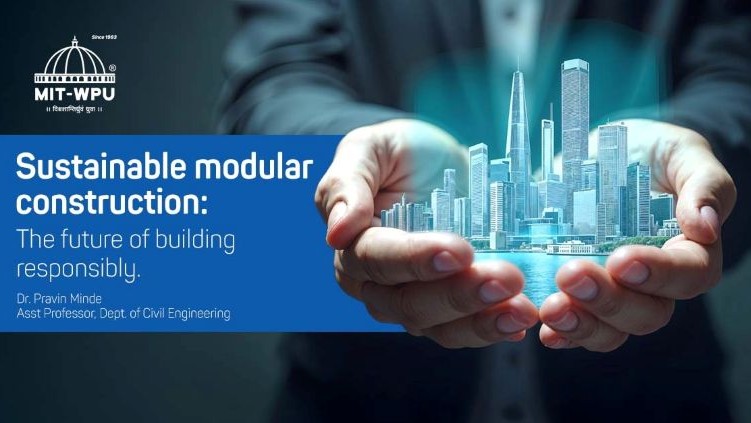
The construction industry is standing at an important turning point.
For many years, our methods of construction were shaped by what happened on site. Materials arrived at site. Labour was mobilised at site. Quality was controlled at site. Delays, wastage, rework and safety risks were also largely managed at site.
That model is now being questioned.
As civil engineers, we cannot look at construction only as a sequence of activities from excavation to finishing. We must look at it as a system. A system that consumes resources, generates waste, affects cities, influences carbon emissions and determines the quality of life of people who finally occupy those spaces. This is where sustainable modular construction becomes more than a trend. It becomes a necessary shift in engineering thinking.
Moving Construction From Site Uncertainty to Process Control
One of the biggest challenges in conventional construction is uncertainty. Weather, labour availability, material handling, quality variations and gaps in coordination can impact project timeframes and outcomes.
Modular and prefabricated construction respond to this challenge by shifting a significant part of the work from the open site to a controlled production environment. Components are designed, manufactured, tested and then assembled at the project location.
This may sound like a technical change, but its implications are much larger. It improves predictability. It reduces rework. It allows better control over material use. It also helps project teams think about construction as an integrated process rather than a series of isolated site decisions.
For a civil engineer, this is a major change in mindset.
Technologies Reshaping the Built Environment
Several construction technologies are now becoming central to this shift. Precast concrete systems, Light Gauge Steel Frame (LGSF)-Ferrocement systems, 3D printing, volumetric modular construction and prefabricated structural components are changing how we plan, produce and assemble built spaces.
Each of these technologies has a specific role. Precast systems improve speed and quality consistency. LGSF-Ferrocement systems offer lightweight and efficient construction options. 3D printing allows for new discussions on material optimization and design flexibility. Volumetric modular construction reduces on-site activity and enables faster project delivery.
When implemented with proper planning, these approaches can support project completion that is up to 50 to 70% faster. They can also reduce construction waste, lower material consumption, improve safety and minimise disruption in dense urban areas.
However, technology alone does not guarantee better construction. The engineer’s judgement remains critical. The question is not only whether a technology is available. The real question is whether it is appropriate for the project, the site, the climate, the cost structure and the long-term performance expected from the built asset.
Sustainability Must Be Engineered, Not Added Later
In construction, sustainability cannot be treated as a decorative idea added at the end of a project. It must be embedded in design, materials, methods, sequencing, logistics and maintenance.
A sustainable project is not only one that uses a few green materials. It is one that reduces waste, uses resources intelligently, improves efficiency, controls emissions and creates value across the life cycle of the structure.
Sustainable modular construction supports this approach because it brings together design precision, controlled production, reduced wastage and faster execution. It also allows engineers to think more carefully about repeatability, standardisation, adaptability and life-cycle performance.
For India, this conversation is especially important. Urbanisation is increasing. Infrastructure demand is rising. Cities are becoming denser. In such a context, the construction industry cannot afford to remain slow, wasteful or highly disruptive.
The Engineer of the Future
The future civil engineer must be comfortable with both fundamentals and transformation.
They must understand structures, materials, geotechnics, construction methods and project execution. But they must also understand BIM, digital engineering, construction analytics, automation, modular systems, sustainability metrics and advanced materials.
This is where postgraduate education becomes important. MIT-WPU, Pune’s M.Tech. in Civil Engineering can help students and young professionals engage with emerging areas such as sustainable construction, digital engineering, advanced materials, construction technology and modular systems.
The purpose of such learning is not only to know more techniques. It is to develop the ability to evaluate, question and apply them responsibly.
Building Faster Is Not Enough
The future of construction will not be defined only by speed. Speed is important, but it cannot come at the cost of safety, durability, sustainability or human need.
The real goal is to build with greater intelligence.
As faculty members, our responsibility is to prepare students for that future. We must help them move beyond conventional site execution and think like professionals who can design processes, evaluate technologies, reduce environmental impact and improve project outcomes.
Sustainable modular construction is one of the clearest directions in which the industry is moving. It offers speed, precision and efficiency. But more importantly, it asks civil engineers to become more thoughtful about the consequences of every construction decision.
The future will belong to engineers who can build not only faster, but better.


 admissions@mitwpu.edu.in