Faculty
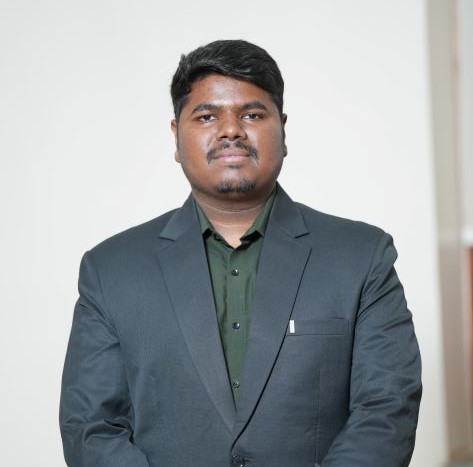
Mr. Pruthviraj Kamble
Research Associate
Profile
Pruthviraj Kamble works in the areas of political science, governance, public policy, and democratic processes. His work focuses on research, academic engagement, and field-based studies that examine electoral behaviour, rural governance, and the functioning of democratic institutions.
He has been actively involved in conducting large-scale field surveys, policy discussions, and academic initiatives on topics such as elections, public policy, and political participation. His work brings together grassroots insights and academic inquiry, contributing to a deeper understanding of governance at both local and institutional levels. He aims to simplify complex political ideas and make them accessible, while encouraging critical thinking and informed democratic engagement. Pruthviraj has contributed to academic research through papers such as “India's Multidimensional Poverty Reduction: Structural Inequities, Policy Gaps, and the SDG 1 Imperatives” and “Bridging Gaps in NEP 2020 Implementation: SMART Strategies for Inclusive Education Reform.” He also serves as a Peer Reviewer for World Development Perspectives (Elsevier Editorial), a Scopus-indexed journal, reflecting his engagement with global academic standards.
He presented his research titled “Indian Knowledge Systems and the Law: Reconnecting Modern Jurisprudence with Ancient Traditions” at the National Seminar on “75 Years of the Constitution of India: Realising the Promise of Justice,” organized by Savitribai Phule Pune University, Pune.
In addition, he contributes to academic teaching and curriculum-oriented initiatives at Savitribai Phule Pune University, including conducting sessions for B.Ed. students on lesson planning, curriculum development, and contemporary pedagogical practices, thereby linking educational theory with practical classroom application.
He is committed to engaging with the realities of rural India and contributing to the development of informed, responsible, and active citizens through research, education, and dialogue.


 admissions@mitwpu.edu.in