Events
NAIP Organized by MIT-WPU in Collaboration with RV University
Dec 18, 2024
Introduction
The National Academic Immersion Program (NAIP) is a flagship initiative organised by MIT World Peace University (MIT-WPU), Pune, in collaboration with RV University (RVU), Bengaluru. This immersion programme took place from 18th to 27th December 2024 and was joined by 93 students and 5 faculty members. This programme aimed at combining academic orientation, industrial exposure, and cultural enrichment into a holistic learning experience for the students. The carefully curated schedule featured activities such as patent drafting workshops, industrial and cultural visits, and interactive sessions with industry experts, all designed to nurture innovation and interdisciplinary collaboration among students.
Day 0 :
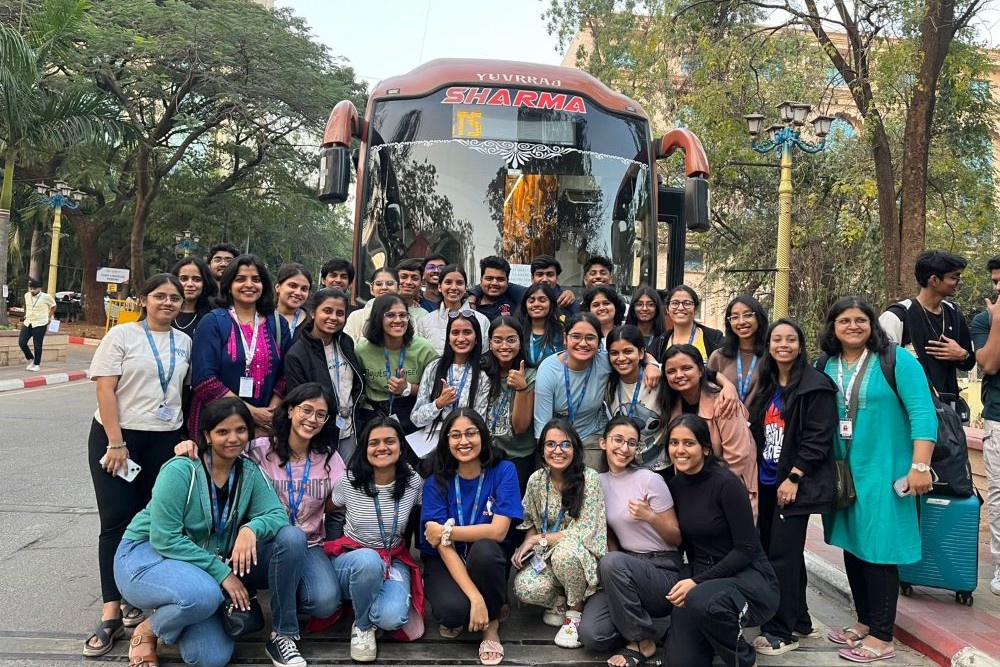
Departure from MIT-WPU | 18th December 2024 The NAIP journey commenced on 18th December 2024, with a short address by the Dean of MIT-WPU Dr. Mangesh Bedekar, Programme Director Dr. Balaji Patil, NAIP Co-ordinators Mr. Prashant Lahane and Mr. Umesh Raut, Faculty Members Dr. Akshita Chanchlani, Prof. Anuradha Nagare, Prof. Sagar Apune, Dr. T. N. Shankar, and Mr. M. Kolar. The participating students departed from the MIT-WPU, Pune campus, for RV University, Bangalore via AC sleeper buses arranged by MIT-WPU. The journey was smooth and comfortable and the meals, be it dinner or breakfast were thoughtfully planned out during the journey, ensuring the students were well taken care of. Overall, the day was dedicated to travel, with participants reflecting on their expectations and preparing for the immersive programme.
Day 1 :
Arrival and Orientation | 19th December 2024 Upon arriving in Bengaluru, students were warmly welcomed at the Stanza Living property by the professors of RV University. After the accommodation allotment, students participated in a one-on-one discussion with Dr. Phani Kumar Pullela, the mentor for the Patent Drafting Workshop. Further, a session aimed at finalising problem statements for patent drafting was arranged, where team selection for the entire drill took place. These teams were guided to identify a unique problem statement that aligned with societal or technical challenges. These problems were to be selected from a pool of seventy-five curated problem statements, each tailored to encourage innovation and practical problem-solving. Finally, after a lot of discussion and consideration, two topics were finalised for the entire workshop. This foundational step marked the beginning of their patent drafting journey, followed by lunch and rest. Finally, day one concluded with a good start and a warm dinner at Stanza Living.
Day 2 :
Workshop Inauguration and Initial Steps into Patent Drafting | 20th December 2024 The second day marked the official start of the workshop, with a formal inauguration ceremony that took place at RV University and was attended by MIT-WPU faculty members including Prof. Sagar Apune, Mr. M. Kolar, Dr. T. N. Shankar, Prof. Anuradha Nagare, and Dr. Akshita Chanchlani. Joining them were RVU professors Mr. Chidhananda, Mr. Ramesh, Mr. Suresh and Mr. Phani. Further, Prof.(Dr.) Sanjay Kumar, Vice Chancellor of RVU, and Dr. G Shobha, Dean, SoCSE, RVU, addressed the students of MIT-WPU with an inspiring speech. Later, Dr. Pullela introduced students to the Foundational Concepts of Patent Drafting. This included five key steps, i.e. Planning, Failure Analysis, Proximity, Positivity in Negativity, and Inspiration from Small Moments. Students delved deep into their problem statements, laying the groundwork for their patent drafts. The interactive sessions and expert guidance ensured a clear understanding of the patent drafting process. The core of the NAIP programme unfolded over this day with a series of engaging sessions on patent drafting, led by Dr. Phani Kumar Pullela.
Session 1: Insights on Patent Drafting Principles
Dr. Pullela’s session covered the seven fundamentals of patent drafting, providing students with a structured approach to their tasks. The session covered some important insights about patent drafting, such as the following steps:
- See What Others Can't See : Students were encouraged to adopt unique perspectives in their research, enabling them to identify innovative solutions overlooked by others.
- Plan : The importance of structured planning in innovation was emphasised, outlining how well-thought-out steps lead to successful outcomes.
- Plans Can Go Wrong : Students were taught to embrace setbacks as opportunities for creative problem-solving.
- Proximity : This principle highlighted the value of being close to the problem to gain deeper insights and understanding of its core issues.
- Appreciate Positives Than Negatives : Students learned to view challenges as opportunities, focusing on the positives hidden within setbacks.
- Small Moments of Inspiration : The session stressed the importance of capturing fleeting ideas, as they often lead to breakthroughs in innovation.
- Ask What the Customer Wants : Understanding the end user’s needs was emphasised as a critical step in designing practical and impactful solutions.
Day 3: Fundamentals of Patent Drafting and Diagram Design | 21st December 2024
The day started with a focus on the technical aspects of patent drafting. Teams began drafting essential diagrams, including the System Diagram, Process Diagram, and Example Diagram, for their respective problem statements. The hands-on activities fostered collaboration and allowed students to visualise their concepts effectively.
Session 2: Patent Drafting Essentials
The session 2 continued with the knowledge sharing on Patent Drafting Essentials, as mentioned below:
- Synergistic Effect : Collaboration and teamwork amplify the value of inventions.
- Technical Effect : The technological advancements and contributions a patent brings.
- Economic Significance : The financial and market impact of the invention.
- Address Sufferings : Solving societal challenges and alleviating pain points.
- Broader Benefits : Ensuring inventions serve a larger purpose and benefit society widely.
- Unmet Needs : Identifying and addressing gaps in existing solutions.
Day 4: Masterclass on Intellectual Property Rights | 22nd December 2024
A highlight of the programme was a Masterclass by Adv. Pranav Bhat on Intellectual Property Rights. The session provided an overview of patents, industrial designs, trademarks, copyrights, and trade secrets, emphasising their practical applications. Students also learned strategies for monetising intellectual property, gaining insights into the broader implications of their innovations. This session enriched their understanding of the legal and commercial aspects of intellectual property.
Session 3: Practical Applications
The final session on Day 4, focused on hands-on activities as follows:
- Creating system diagrams, process diagrams, and example diagrams for selected patent ideas.
- Individual guidance sessions were held for those with additional ideas, ensuring thorough support for all participants.
- Students also filled out a Google form detailing their patent ideas, cementing the concepts developed during the sessions.
Day 5: Outdoor Visit in Bengaluru | 23rd December 2024
This day was dedicated to exploring Bengaluru’s industrial landscape. The students visited the Bannerghatta National Park, participating in activities such as a safari and a zoo visit. The major highlights included sightings of exotic animals like lions, tigers, leopards, etc. The tour continued at the HAL Heritage Centre and Aerospace Museum, where students explored India’s aerospace advancements through the display of fighter jets, submarines, and other innovations. This visit provided a fascinating glimpse into the country’s technological heritage.
Day 6: Cultural and Heritage Visit to Mysore | 24th December 2024
On this day, students embarked on a cultural excursion to Mysore, located 160 kilometres from Bengaluru. The visit included a tour of the iconic Mysore Palace, a marvel of Indo-Saracenic architecture, offering a glimpse into the royal history of Karnataka. Students also explored local markets, indulging in cultural experiences and shopping for souvenirs. Another highlight was the Payana Car Museum, which showcased an exclusive collection of vintage and antique luxury cars, including the Daimler DE 36 and World War II jeeps. This museum very well displayed a blend of history and innovation in the automotive industry, leaving the participants with a lasting impression.
Day 7: Award Ceremony and Valedictory Session | 25th December 2024
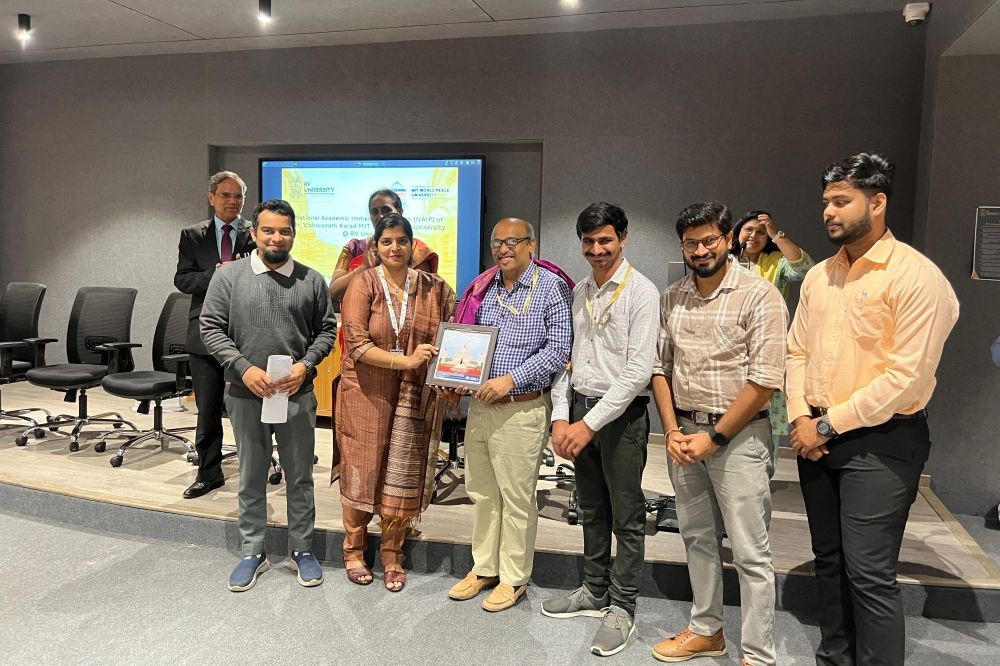
The final day of the programme featured the NAIP Award Ceremony, where students were recognised for their active participation and achievements during the programme. Awards were distributed to celebrate innovative contributions, teamwork, and dedication displayed throughout the sessions. The penultimate day featured a grand award ceremony, where faculty members from MIT-WPU, including Mr. Kolar, Dr. Shankar, Prof. Anuradha Nagare, and Dr. Akshita Chanchlani, expressed their gratitude and felicitated RVU’s managing professors, including Mr. Chidhananda, Mr. Suresh, Mr. Ramesh, and Dr. Phani Kumar Pullela. Similarly, RVU’s managing professors also felicitated the MIT-WPU faculty members. Also, participants were awarded certificates, mementoes, and recommendation letters for jobs and higher studies by Dr. Pullela. The event highlighted the collaborative success of the programme and left the participants inspired and motivated. Finally, the day concluded with a farewell lunch.
Day 8 :
Return Journey to Pune | 26th-27th December 2024 The team concluded their NAIP experience and began the return journey to MIT-WPU campus, carrying valuable knowledge, memories, and experiences from the programme. On December 27th, students departed from Bengaluru, via AC sleeper buses arranged by MIT-WPU, where both the dinner and breakfast were provided, ensuring a smooth and comfortable return. The group arrived back at MIT-WPU with a wealth of memories and newfound knowledge.
Key Learnings and Outcomes of NAIP
- Enhanced understanding of patent drafting, including technical and legal aspects.
- Improved problem-solving skills through real-world applications and insights.
- Exposure to innovation through guided sessions and practical exercises.
- Cultural and heritage appreciation through city tours and local exploration.
- Strengthened teamwork and collaboration among participants.
Programme Highlights and Impact of NAIP
The National Academic Immersion Programme (NAIP) offered some enriched experiences in many aspects, as mentioned below:
Academic Immersion
Intensive workshops on patent drafting equipped students with valuable technical and analytical skills. Interactive sessions with experts fostered a deeper understanding of intellectual property.
Industrial Exposure
Visits to premier industrial sites and museums provided practical insights into technological advancements.
Cultural Exploration
Excursions to Mysore and Bengaluru’s heritage sites enriched students’ cultural awareness and appreciation.
Collaborative Learning
Teams worked together on real-world problems, enhancing their teamwork and problem-solving abilities.
Professional Development
Certificates and recommendation letters added value to students’ academic and professional portfolios.
Conclusion
The NAIP programme exemplified the spirit of collaboration and innovation. By blending academic rigour with cultural exploration, it provided students with a comprehensive and transformative learning experience. The partnership between MIT-WPU and RVU highlighted the potential of interdisciplinary education in fostering future-ready professionals.
Acknowledgements
MIT World Peace University extends heartfelt gratitude to RV University, Dr. Phani Kumar Pullela, Adv. Pranav Bhat, Mr. Chidhananda, Mr. Suresh, Mr. Ramesh and all faculty members and organisers for their invaluable contributions to the success of the National Academic Immersion Programme. Also, a special mention to MIT-WPU faculty members including for managing the students and creating a memorable experience for them during the entire NAIP programme.





 admissions@mitwpu.edu.in