Centre of Excellence in eMobility
in Association with International Automobile Center of Excellence (iACE) 
The Centre of Excellence (CoE) in eMobility at MIT-WPU, Pune, was established to offer a robust research ecosystem in electric mobility technologies with an emphasis on skill development, innovation, and industry partnership. The centre offers students practical exposure to electric vehicle systems, battery technologies, power electronics, and vehicle control systems, focusing on honing futuristic industry-oriented knowledge through state-of-the-art lab infrastructure and practical training platforms. Industry and academia have observed a disconnect between expectations and practice, which the initiative seeks to bridge through ‘learning by doing’ for undergraduate and post-graduate students across multi-disciplinary engineering streams. Through technical training programmes, workshops, seminars, conferences, internships, and expert sessions, the centre fosters innovation and develops skill sets conducive to the electric mobility domain.
The eMobility Centre of Excellence at MIT-WPU is established in prestigious collaboration with the International Automobile Centre of Excellence (iACE), Gujarat. iACE is a premier joint venture between the Government of Gujarat and Maruti Suzuki India Ltd., designed to drive innovation in the automotive sector. The eMobility CoE at MIT-WPU serves as the exclusive extension center of iACE for the Southern Region of India.
The eMobility CoE is a hub for cutting-edge learning and skill development, offering specialized programs for a wide range of candidates:
- M.Tech in eMobility: MIT-WPU proudly runs its flagship M.Tech in eMobility program utilizing this CoE, providing students with hands-on experience in next-generation electric vehicle technologies.
- Skill Enhancement Certifications: Short-term, high-impact courses designed to bridge the gap between academia and industrial requirements.
- Standard & Customized Training: Tailored curriculum options available for:
- Students: Foundational courses starting from 10th Grade onwards to inspire the next generation of engineers.
- Industry Professionals: Specialized modules for those directly or indirectly involved in the Electric Vehicle (EV) ecosystem.
Key Objectives
This program focuses on developing employability skills, helping students get industry exposure while in college and research
- Conduct advanced hands-on technical training for undergraduate and postgraduate multidisciplinary students.
- Improve employability and bridge the industry-academia skill gap.
- Promote training, workshops, internships, seminars, conferences, expert sessions and Faculty Development Programme (FDPs) in the areas to promote expeditious expertise.
- Launch systems for the automotive domain to enable and cultivate an ecosystem for creative minds.
Industry Collaborations
The Centre of Excellence in e-Mobility encourages Industry team members to augment applied research and real-world learning initiatives.
The centre supports:
- Capstone projects for students and industry-sponsored research
- Internships and placements in the automotive and EV industries
- Consultancy assignments in Electric Mobility Technologies
- Professional workshops, guest lectures and industry expert sessions
- Industrial visits for experiential learning
- Training programmes for industry personnel and neophytes
- CSR-supported research and innovation initiatives
- Faculty–industry exchange programmes and sabbatical opportunities
Facilities and Infrastructure
The Centre of Excellence in e-Mobility will have various domain-specific systems and training platforms to enable students and researchers to learn about the complete ecosystem of electric vehicle technologies.
These facilities enhance battery management research, electric powertrain testing, vehicle electronics training and EV system exploration.
Battery Management System Development Platforms
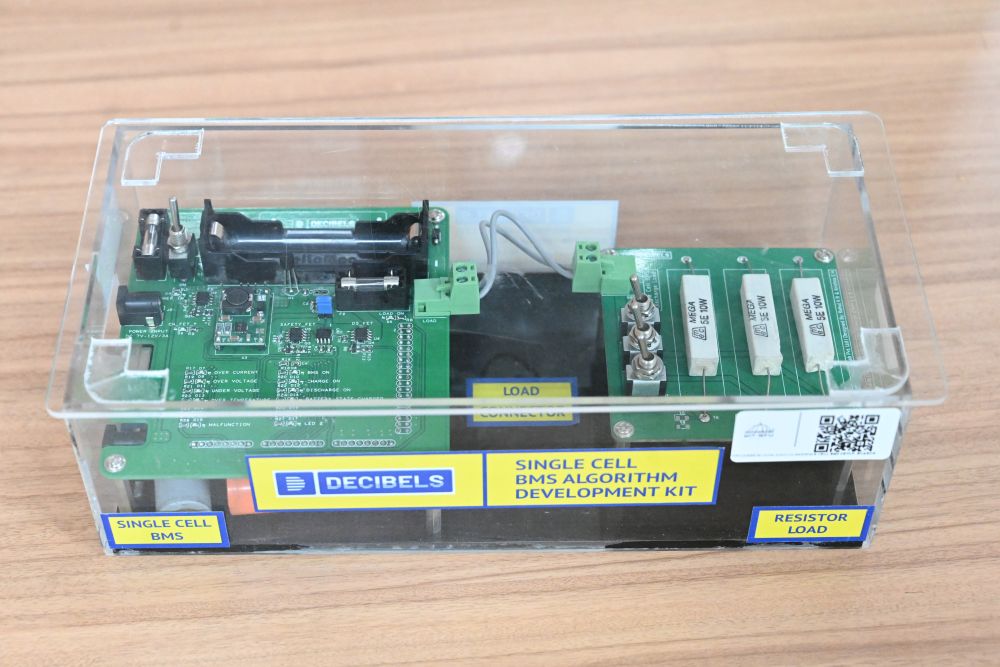
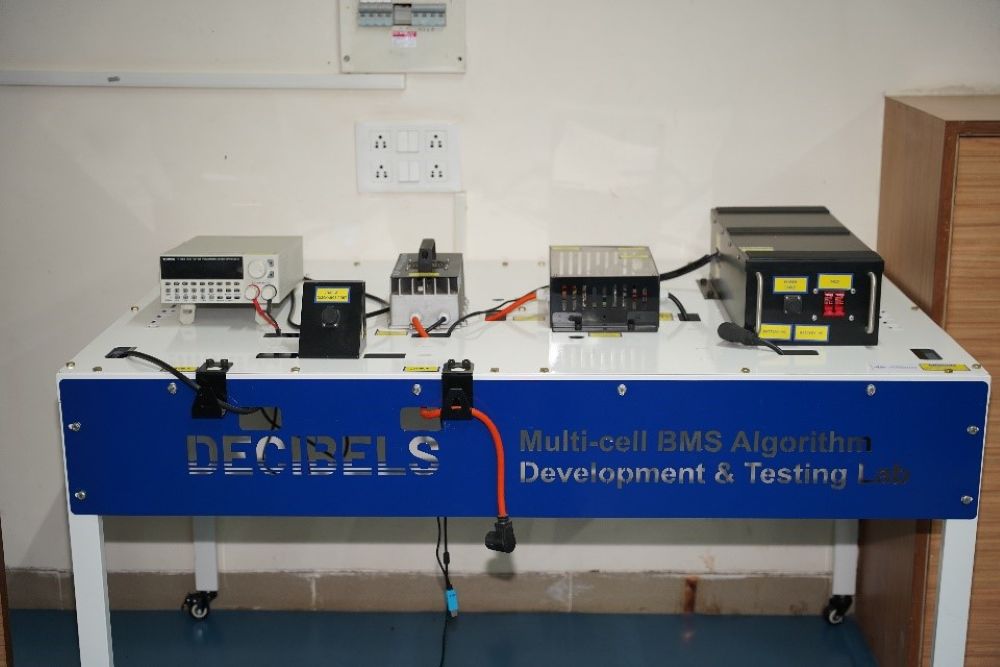
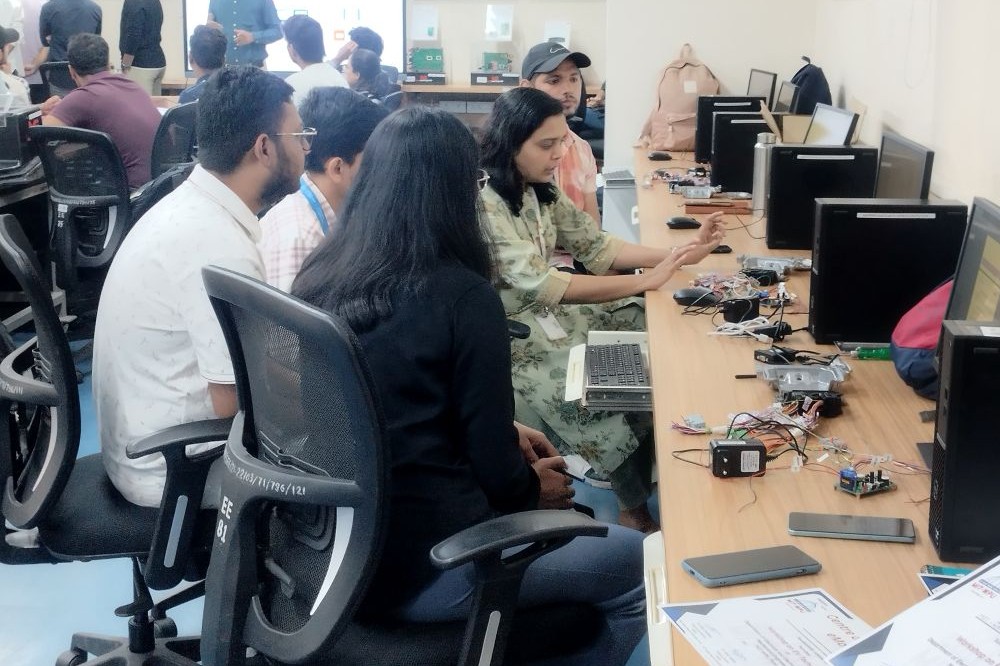
The focus of the centre includes dedicated development platforms enabling students to create, verify, and deploy Battery Management System (BMS) algorithms.
These platforms enable the development of algorithms for State of Charge, State of Health monitoring and cell balancing approaches. Practical experimentation and simulation-based testing allow students to implement and validate their algorithms.
Battery Testing System
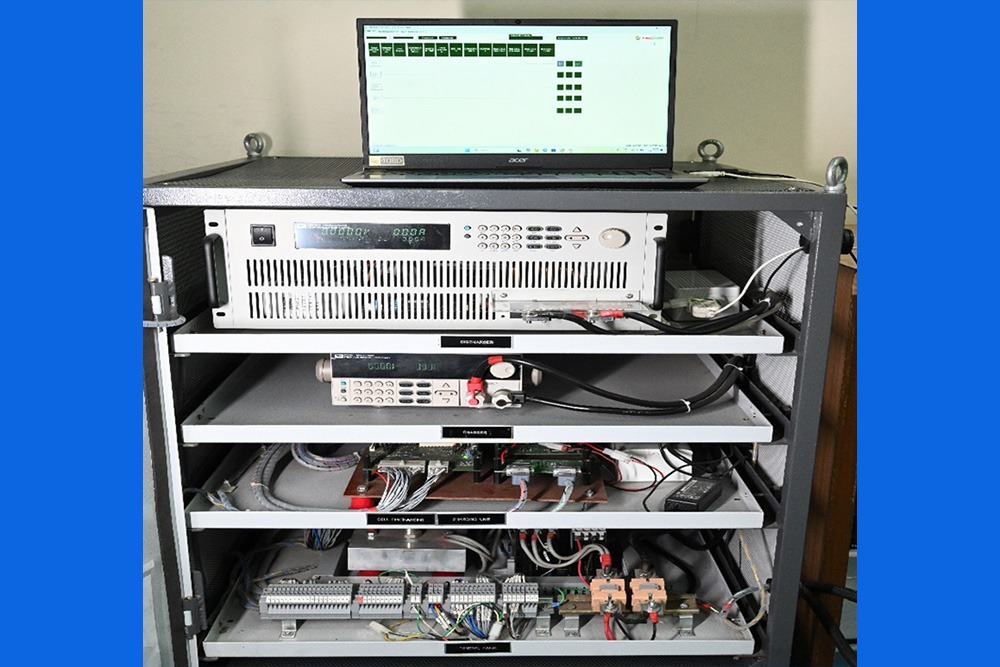
Specialist battery testing equipment allows us to analyse battery performance and charging/discharging models with the next level of detail, alongside thermal information.
It helps students and researchers assess battery performance across a variety of operating conditions to better understand key elements of energy storage systems used in EVs.
Electric Vehicle Training Platforms
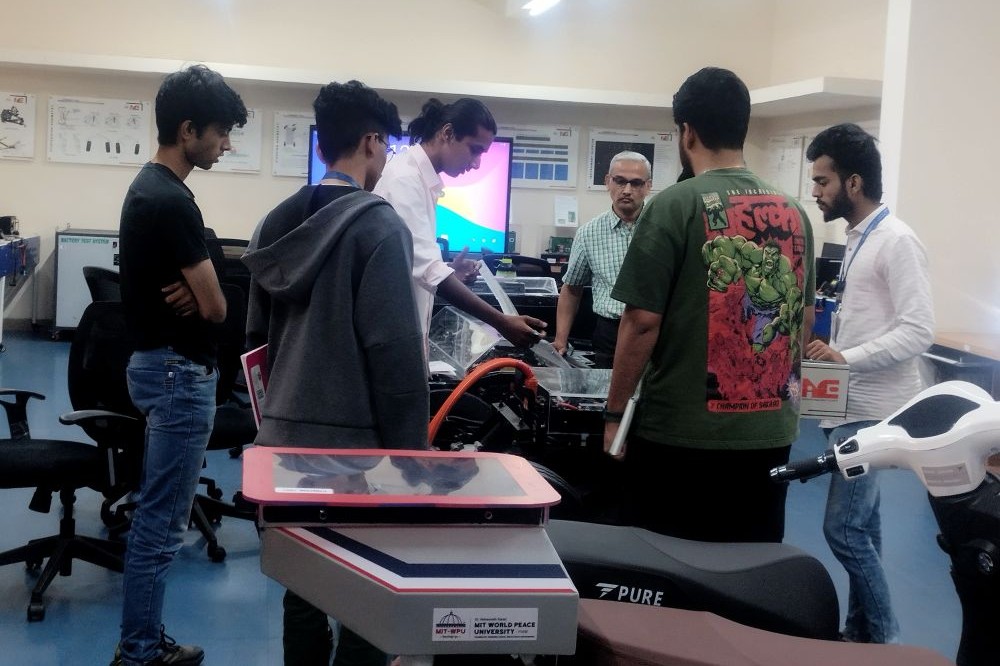
Several working EV systems in the centre provide practical knowledge to students on how electric vehicles work and their architecture.
These platforms allow experimentation with:
- Electric powertrain systems
- Motor controllers
- Battery systems
- Vehicle electronics
Students gain hands-on experience working on components that power modern electric vehicles.
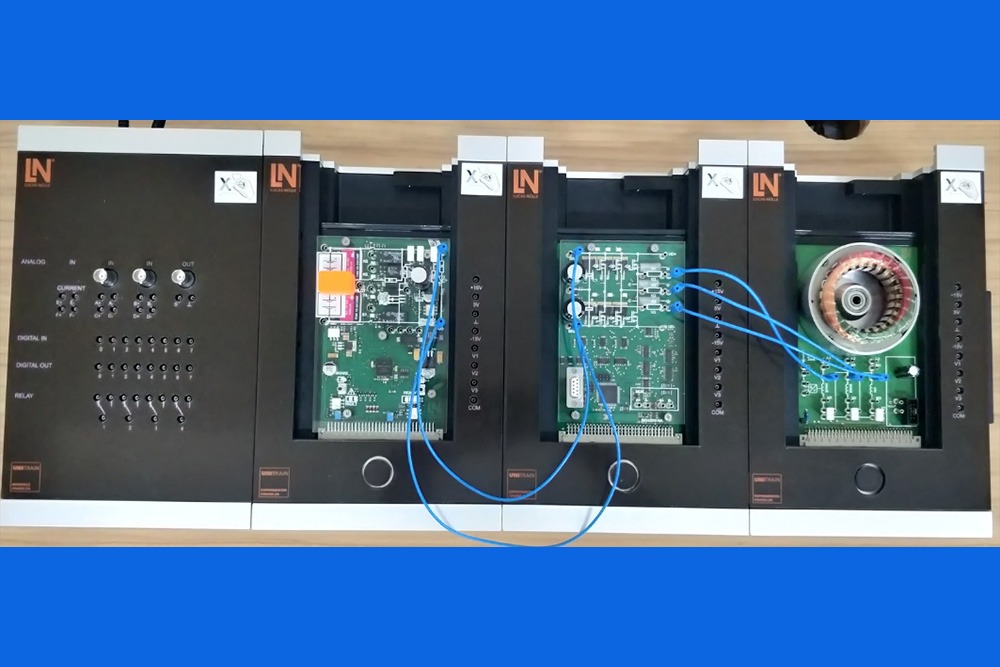
Electric Vehicle Drive System Models
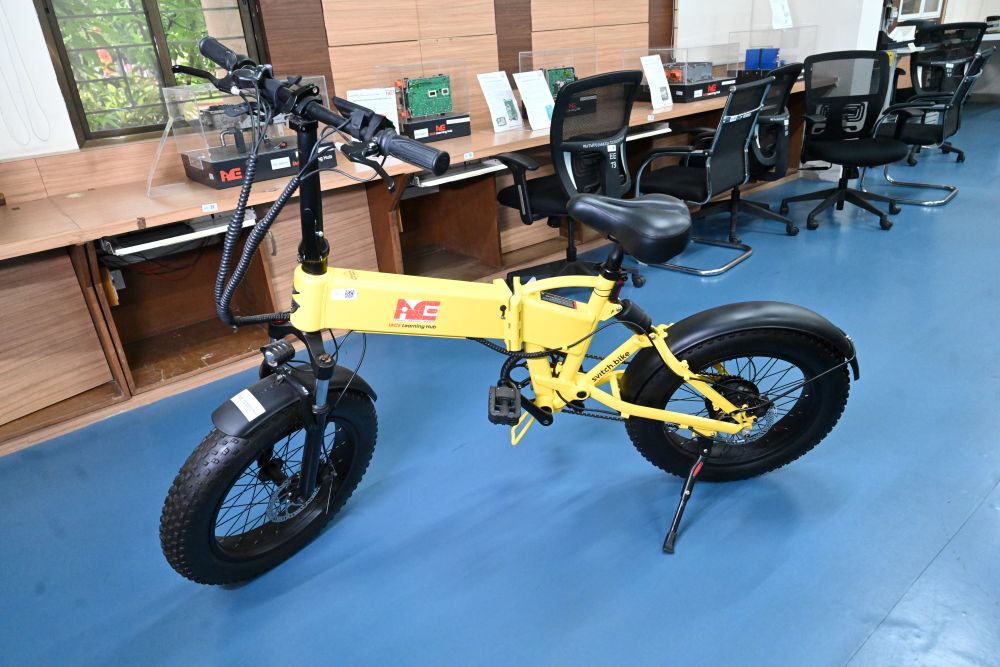
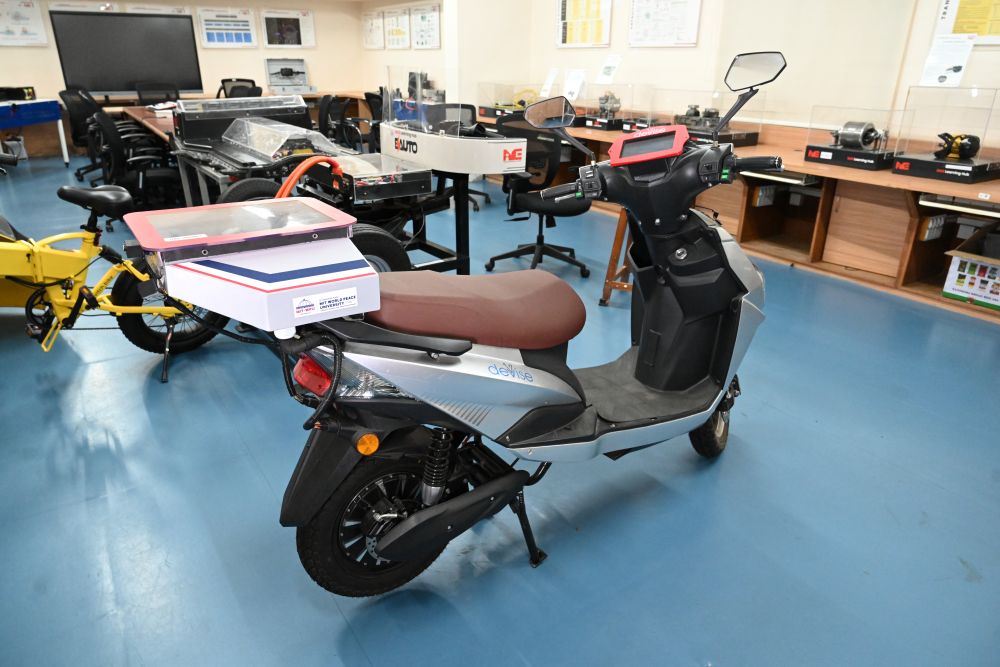
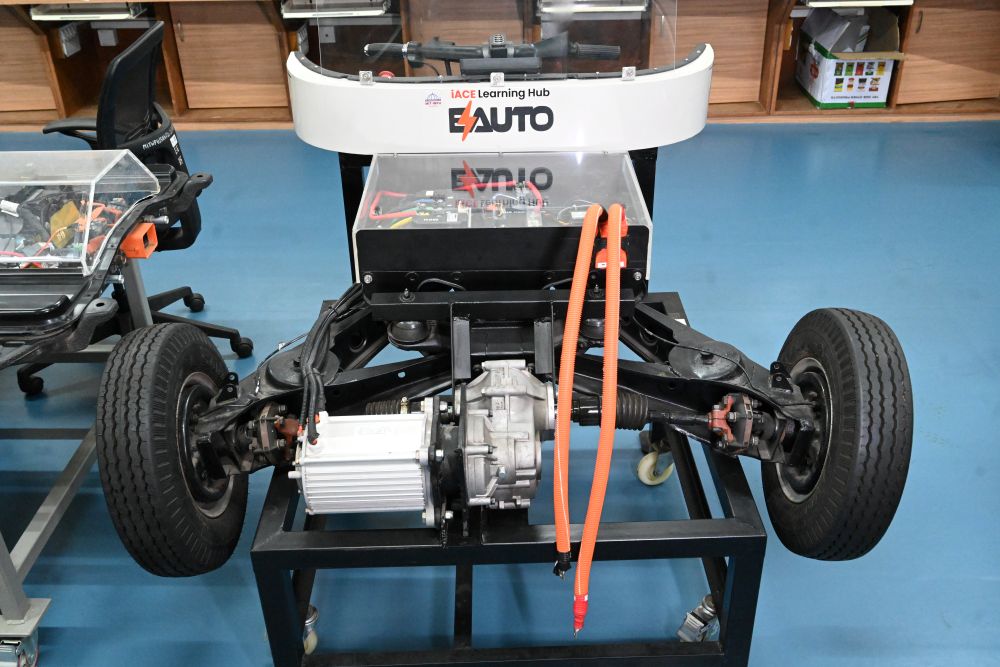
The lab is equipped with working models of EV drive systems, from two-wheelers to three-wheelers, thus providing students the opportunity to learn about vehicle performance, motor control and battery behaviour.
These systems are very good for testing main parameters such as speed control, motor performance, and system efficiency under working conditions.
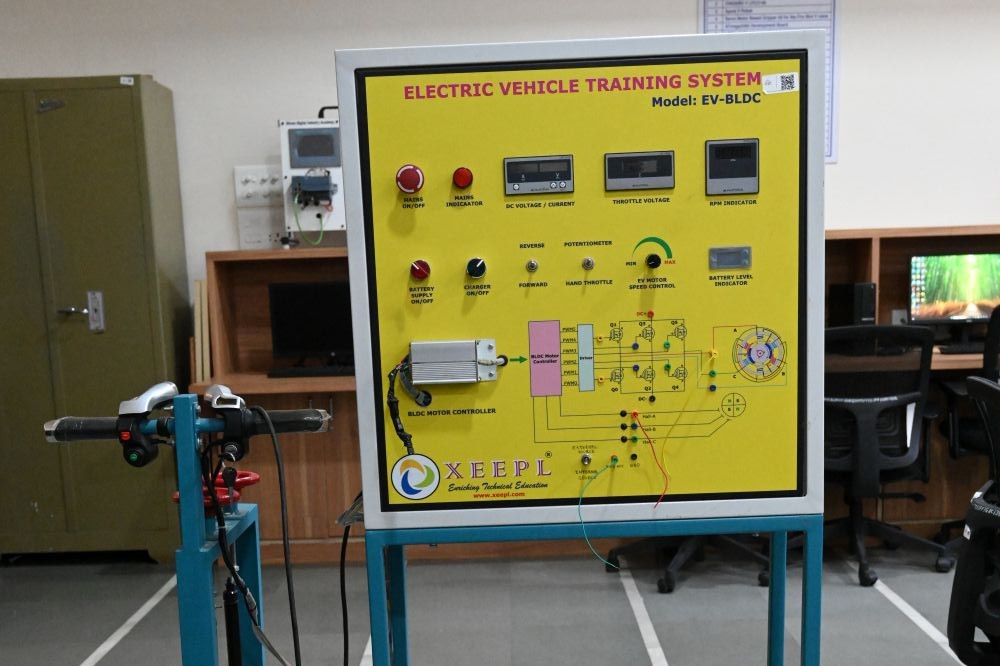
Electric Vehicle BLDC Motor Training System
The BLDC training platform aids students in learning about the operation and control of brushless DC motors for use in electric vehicles.
It allows students to see how electric power is turned into mechanical motion and study the cooperation of motor controllers, Sensors and battery systems (including regenerative braking) in EV-based applications.
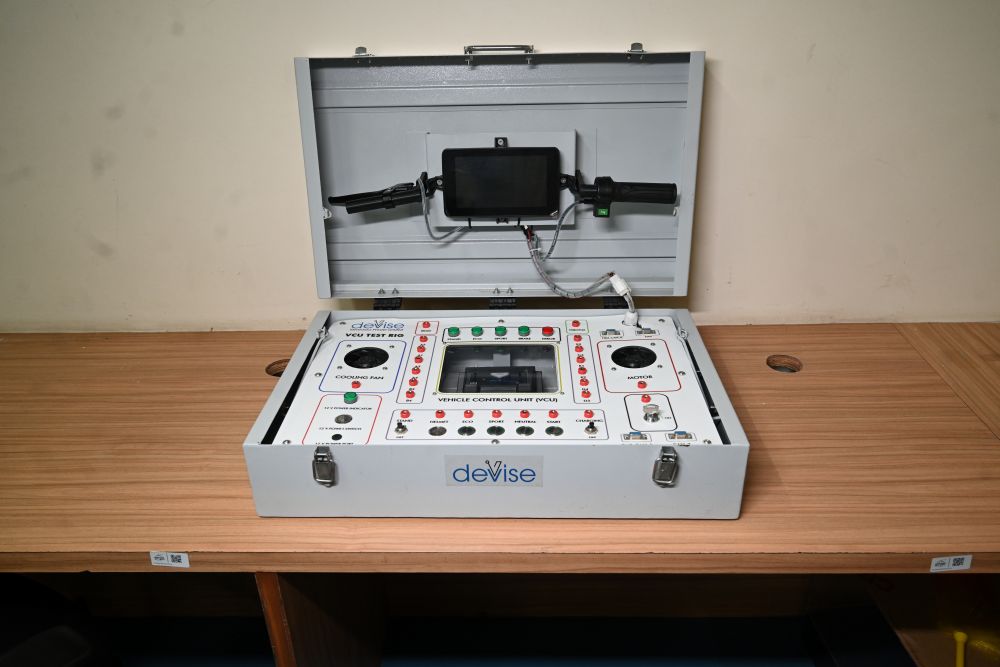
Vehicle Control Unit (VCU) Testing Platform
Within the centre is a Vehicle Control Unit test system that replicates real vehicle operating conditions in a controlled laboratory environment.
This enables researchers and students to iterate and verify vehicle control algorithms without needing a whole vehicle prototype.
Automotive Electrical and Electronic Systems Training
Specialised training kits teach students the theory behind automotive electrical and electronic systems.
These systems enable the learner to explore:
- Electrical circuits used in vehicles
- Automotive sensors
- Signal processing in vehicle electronics
- Diagnostic and troubleshooting techniques
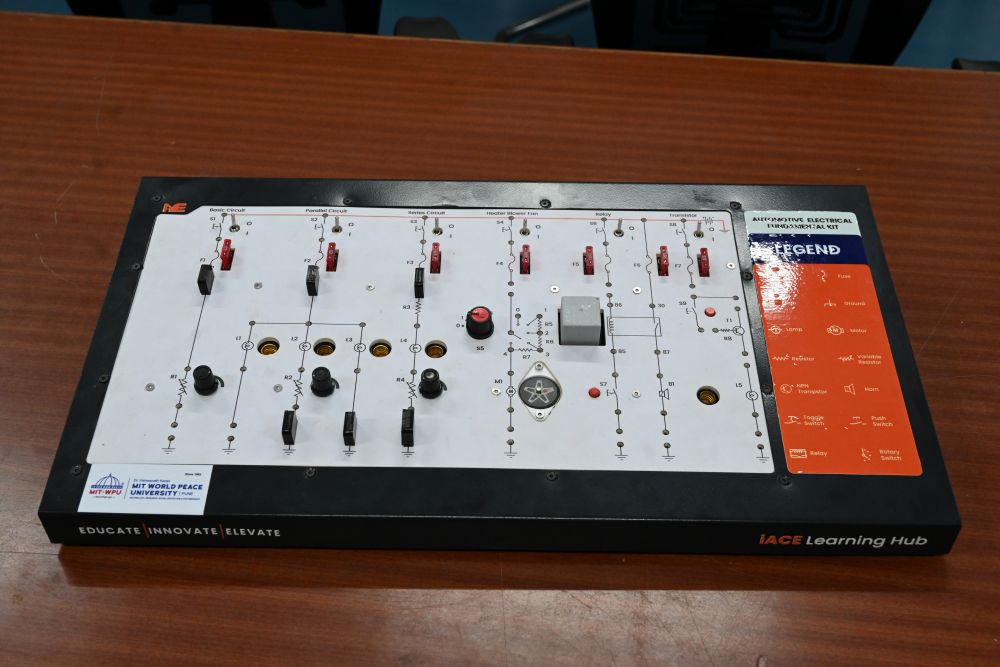
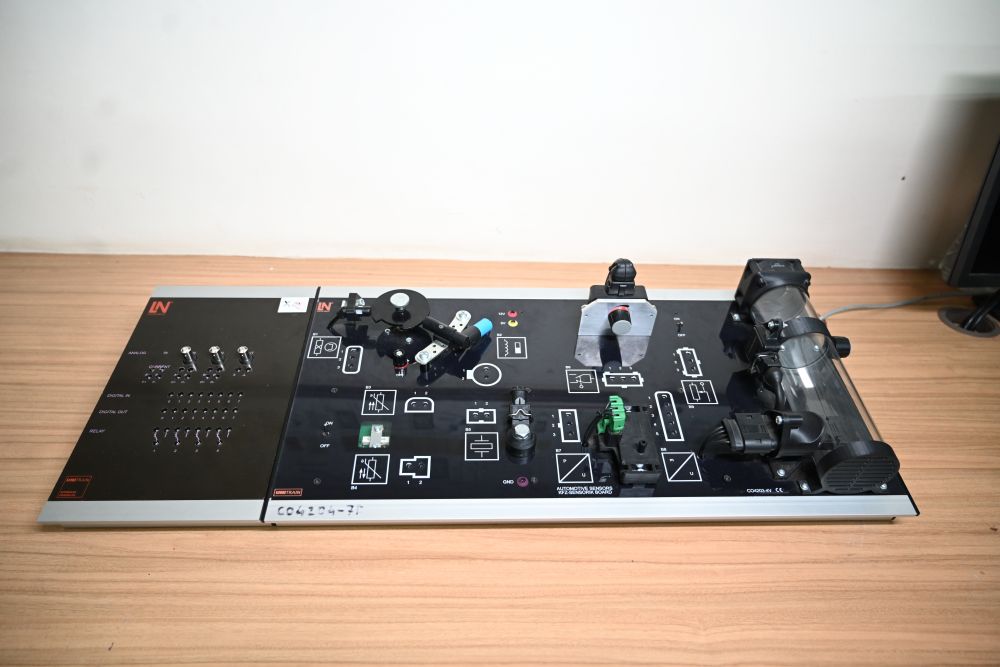
These kits help with hands-on learning, which strengthens the basics of vehicle electronics and control systems.
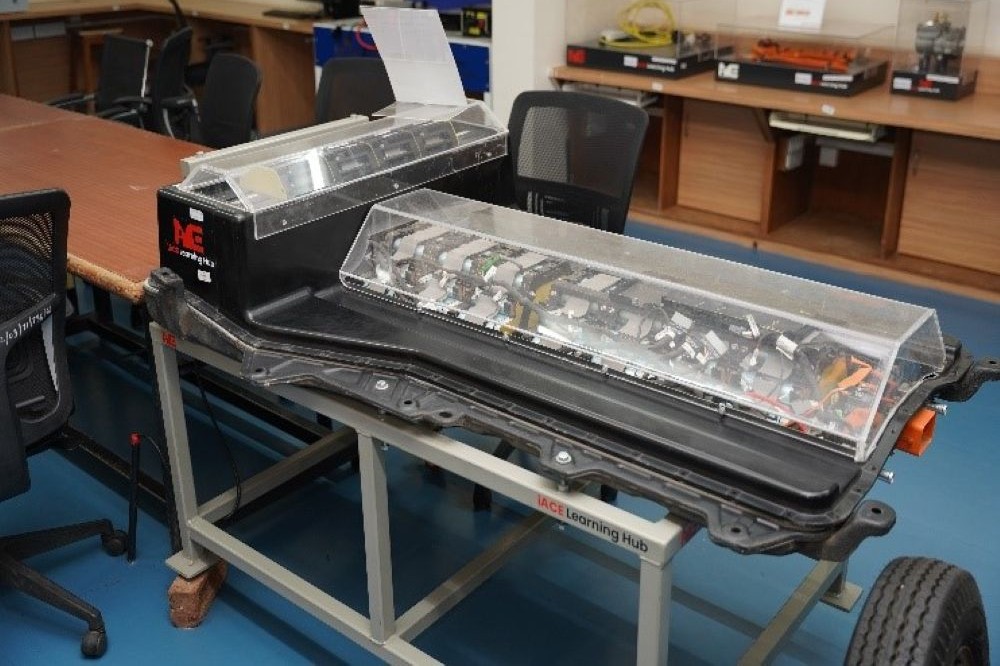
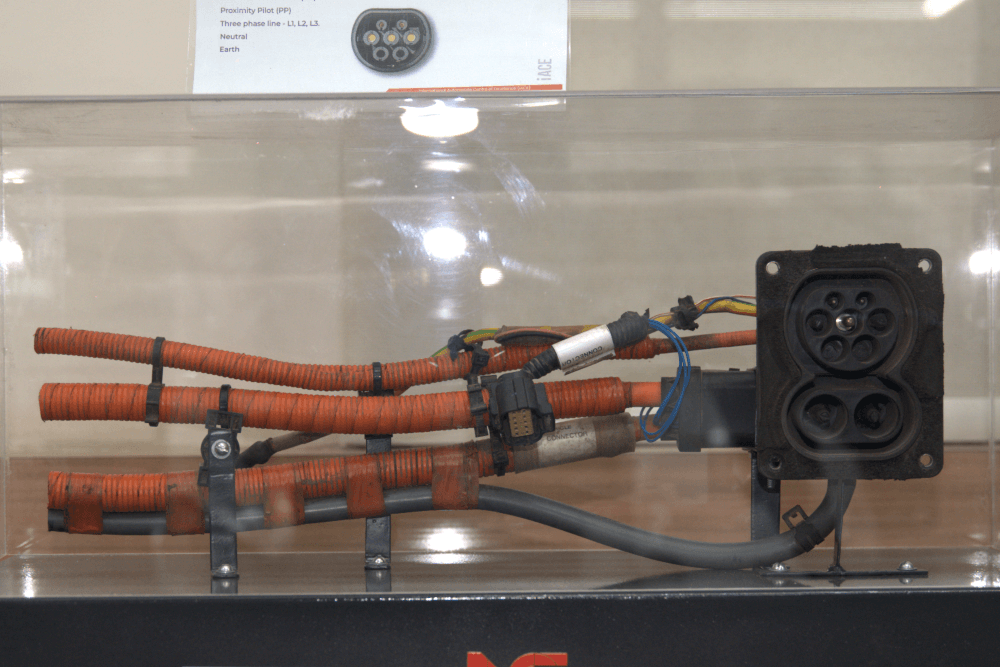
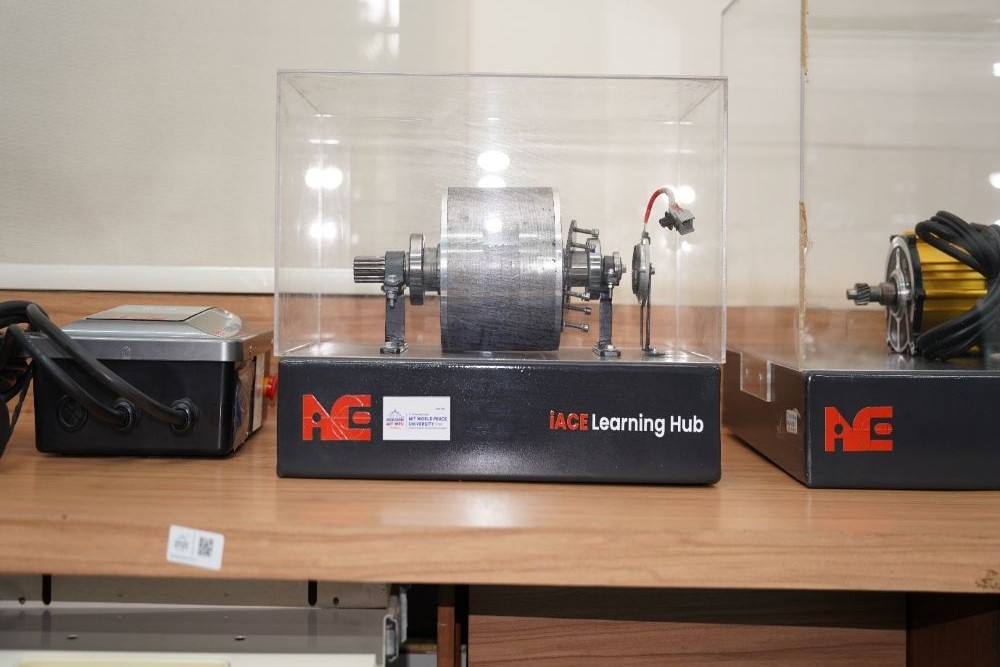
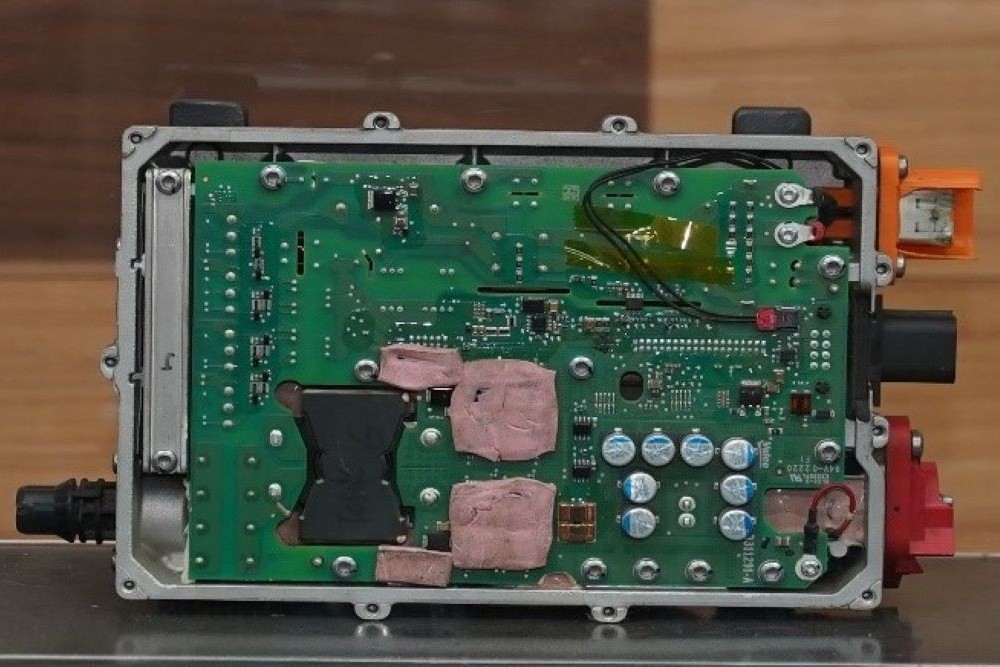
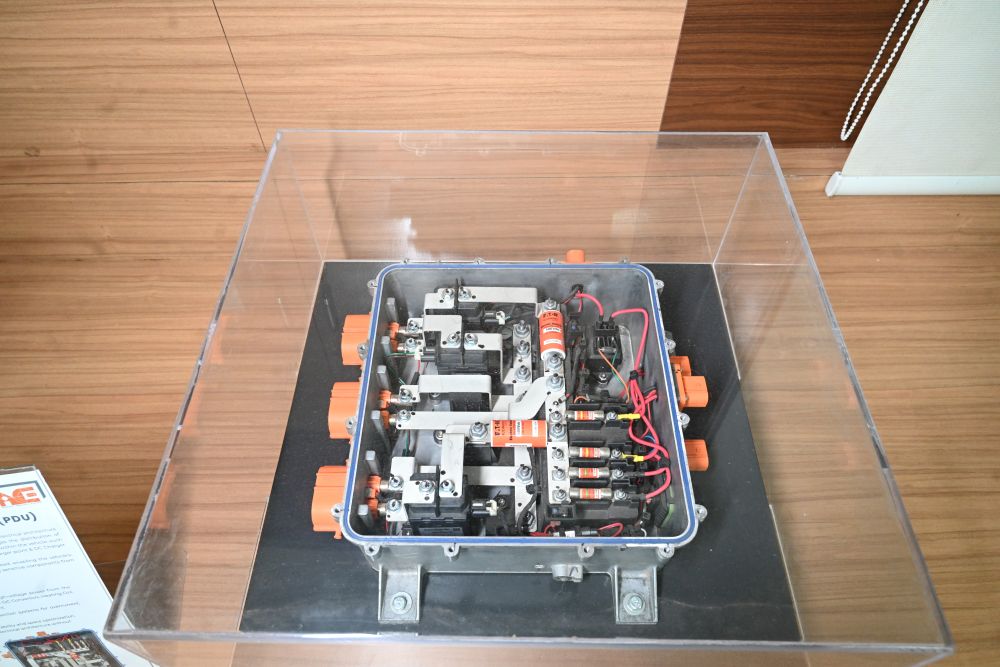
EV Components Gallery
The centre also boasts an EV components gallery, showcasing parts from contemporary electric vehicles.Such facilities help students see and learn mechanical, electrical, and electronic components used in EVs, thereby understanding vehicle architecture and systems integration better.
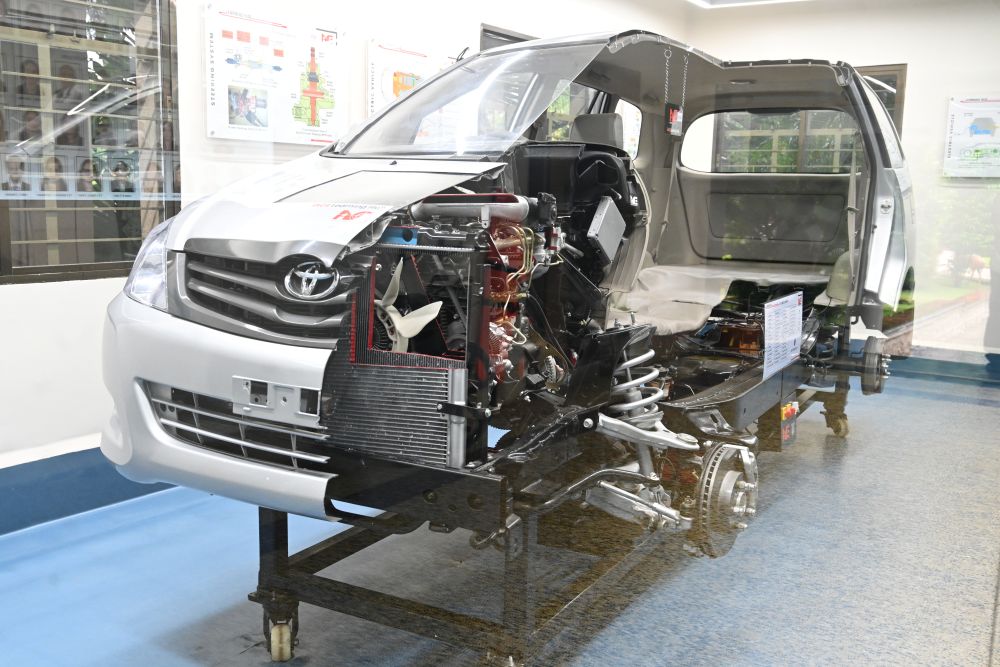
Automotive Section Model
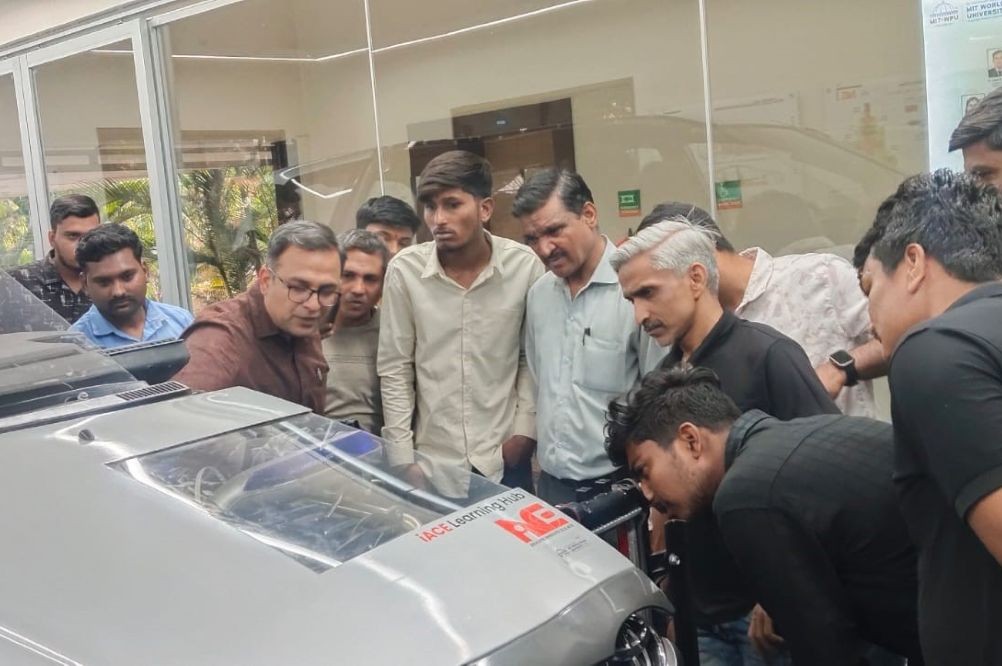
At the centre is a sectional model for a passenger vehicle that gives students an insight into various subsystems as well as drivetrain architecture.Use this to demonstrate the functionality and construction of automotive parts as part of classroom lectures or lab demonstrations.
Experiential Learning and Research
The Centre of Excellence in e-Mobility aids various academic and research activities aimed at fostering emerging technologies in the electric mobility sector.
These include:
- Research projects by students in electric mobility technologies.
- Technical workshops and training programmes.
- Industry-led seminars and expert talks.
- Faculty development programmes.
- Collaborative research with industry partners.
Through these initiatives, the centre empowers students to engage in emerging technologies from electric mobility and sustainable transportation.
Building Future-Ready EV Engineers
The global transport sector is witnessing an EV revolution. The CoE equips students to play a critical role in this transition through access to state-of-the-art infrastructure, hands-on experience and collaboration with the industry. The aim is to produce leading professionals to cement the future of sustainable mobility through research, innovation and experiential learning.


 admissions@mitwpu.edu.in