
M.Pharm Pharmaceutical Analysis
Programme Overview
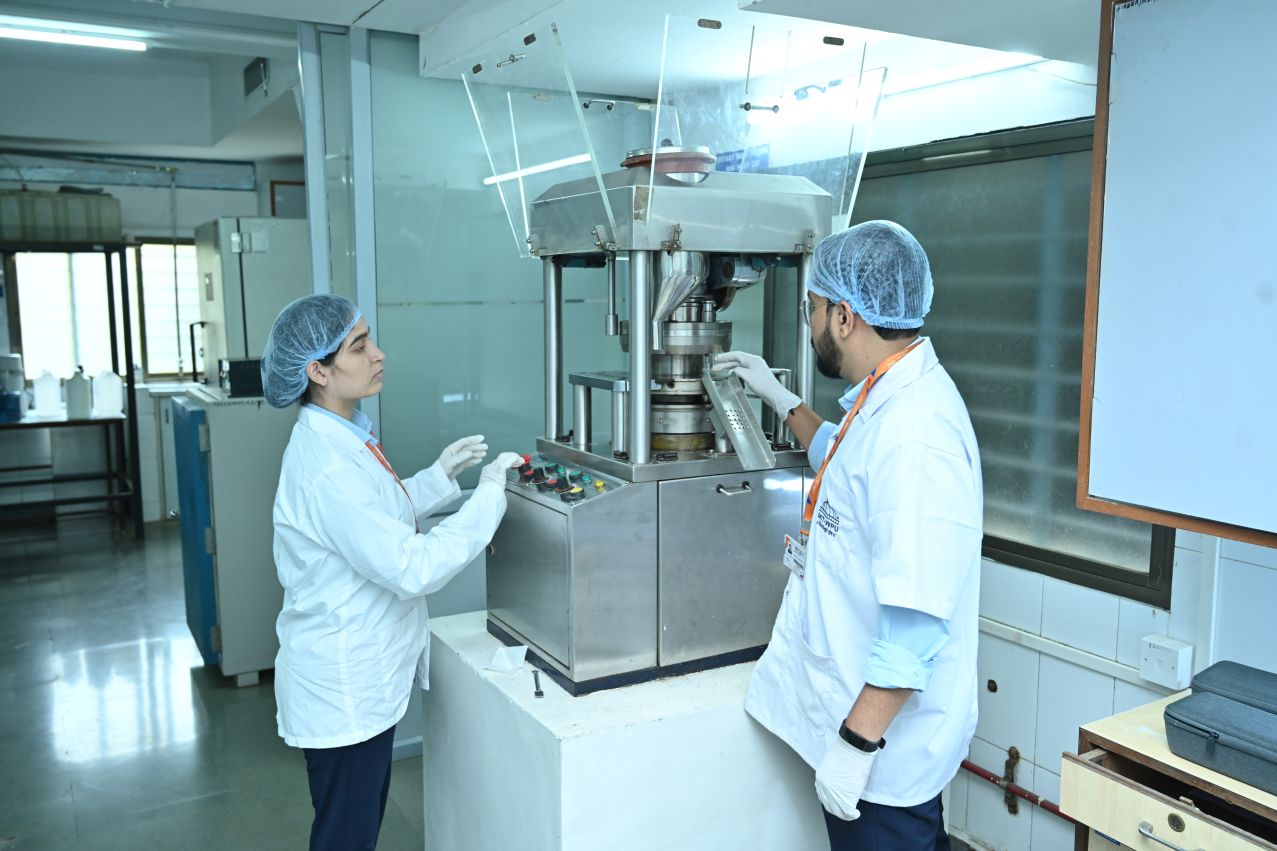
The M.Pharm in Pharmaceutical Analysis programme at MIT-WPU provides students with training in research methodology and the latest technologies in the field of pharmaceutical analysis. This includes modern pharmaceutical analytical techniques, quality control and assurance, advanced instrumental analysis, food analysis, and herbal and cosmetic analysis. The programme allows students to choose between participating in a seminar or submitting an assignment in each semester, and encourages collaboration and interaction with industry, national and international research institutions through guest lectures and other opportunities for engagement. This programme is designed to prepare students for careers in the field of pharmaceutical analysis and related industries.
Duration & Fees
Duration
2 Years
Applications Closed for 2026
Fee Per Year
₹ Rs. 2,55,000
Cautionary Deposit: Rs. 25,000/- Refundable


Scholarship
| GATE Score | MIT-WPU Stipend per month | Workload / Teaching Assistantship in MIT-WPU |
|---|---|---|
|
Eligible GPAT Score for stipend as per AICTE norms |
₹ 12,500/- (For the entire duration of the programme) |
8 hours workload per week |
Note:
- During Working Hours, M.Pharm Students will be considered for 'on campus job' as per Policy.
- Stipend of M.Pharm students is applicable for the entire duration of the Programme.
- Stipend is not adjusted against fees; it is payable separately after eligibility is ascertained.
- In case student is receiving any government scholarship/stipend, University stipend will not be applicable.
Terms & Conditions Apply:
- All Scholarships are awarded on a First Come First Serve basis. All Scholarships are awarded as fee adjustments.
- To continue the scholarship for the entire duration of the programme, a minimum level of the academic score has to be maintained at an 8 CGPA across all semesters, attendance is to be maintained at a minimum of 80 percent, with no live backlogs in any subject/programme and no semester break, and there should be no disciplinary action against the student.
For more detailed information visit our website: https://mitwpu.edu.in/scholarships
Eligibility
Minimum 55% aggregate marks in a B. Pharm. degree from an institution recognized by the Pharmacy Council of India or an equivalent examination from a government-approved university/ institution (Minimum 50% aggregate marks for candidates belonging to the Reserved Category from Maharashtra State). Additionally, Candidates must be registered with the State Pharmacy Council. Those who are not registered at the time of admission must submit the registration certificate within one month of securing admission.
Selection Process
Admission will be based on the GPAT 2026, 2025, or 2024 score and Personal Interaction (PI) score, conducted by the University according to the prescribed schedule. For admission under sponsored category, candidate must have a minimum of two years of full-time work experience in a registered firm, company, industry, educational/research institute, Government Department, or Government Autonomous Organization in the relevant field in which admission is sought. A Sponsorship Certificate (in the prescribed format) is mandatory for admission under this category
Programme Highlights
- Curriculum approved by Pharmacy Council of India
- Industry Oriented Research Projects
- Application-based learning pedagogy
- Research opportunities to collaborate with Internationally acclaimed faculty
- Attractive Stipends for GPAT Qualified Students
- Guest Lectures by international Faculty
- Industrial Internships and Projects with top pharma MNCs
- State of the art Laboratories and research facilities
- Seed funding for student research projects and Start-ups
Programme Structure
| Sr. No | Course Name/Course Title | Course Type | Credits Theory | Credits Lab |
|---|---|---|---|---|
|
1 |
Modern Pharmaceutical Analytical Techniques | PC | 4 | |
|
2 |
Advanced Pharmaceutical Analysis | PC | 4 | |
|
3 |
Pharmaceutical Validation | PC | 4 | |
|
4 |
Food Analysis | PC | 4 | |
|
5 |
Pharmaceutical Analysis Practical I | PC | 6 | |
|
6 |
Seminar/Assignment | PC | 4 | |
|
7 |
Scientific Studies of Mind, Matter, Spirit and | UC | 2 | |
|
8 |
Consciousness | UC | 1 | |
| Total | 18 | 11 | ||
|
Total Credits: Semester I |
29 | |||
| Sr. No | Course Name/Course Title | Course Type | Credits Theory | Credits Lab |
|---|---|---|---|---|
|
1 |
Advanced Instrumental Analysis | PC | 4 | |
|
2 |
Modern Bio-Analytical Techniques | PC | 4 | |
|
3 |
Quality Control and Quality Assurance | PC | 4 | |
|
4 |
Herbal and Cosmetic Analysis | PC | 4 | |
|
5 |
Pharmaceutical Analysis Practical II | PC | 6 | |
|
6 |
Seminar/Assignment | PC | 4 | |
|
7 |
Peacebuilding: Global Initiatives | UC | 2 | |
| Total | 18 | 10 | ||
|
Total Credits: Semester II |
28 | |||
| Sr. No | Course Name/Course Title | Course Type | Credits Theory | Credits Lab |
|---|---|---|---|---|
|
1 |
Research Methodology and Biostatistics**** | PC | 4 | |
|
2 |
Journal club | PC | 1 | |
|
3 |
Discussion / Presentation (Proposal Presentation) | PC | 2 | |
|
4 |
Research Work | PC | 14 | |
| Total | 7 | 14 | ||
|
Total Credits: Semester III |
21 | |||
| Sr. No | Course Name/Course Title | Course Type | Credits Theory | Credits Lab |
|---|---|---|---|---|
|
1 |
Journal club | PC | 1 | |
|
2 |
Discussion / Final Presentation | PC | 3 | |
|
4 |
Research Work | PC | 16 | |
| Total | 4 | 16 | ||
| Co-curricular Activities (Attending Conference, Scientific Presentations and Other Scholarly Activities)# | PC | Min=2Max=7* | ||
|
Total Credits: Semester IV |
20 | |||
Career Prospects
Production Chemist
Formulation Chemist
Medical Representative
Hospital and Community Pharmacist
Sales and Distribution Executive
Drug Regulator
Medical Insurance Assessor
Pharmaceutical Sales Consultant
Pharmacoeconomic Specialist
Academics
Pharmacy Legal Consultant
Industrial Pharmacist
Research and Development Scientist
Pharmacovigilance Officer
Medical Transcription
Scientific Writer
Regulatory Affairs Officer
Clinical Research Scientist
Entrepreneurship (Pharmacy, Pharmaceutical Company, Sales and Logistics)
Assistant Professor after completing NET/SET
Programme Outcomes
- PO1 Pharmacy Knowledge: Possess knowledge and comprehension of the core and basic knowledge associated with the profession of pharmacy, including biomedical sciences; pharmaceutical sciences; behavioral, social, and administrative pharmacy sciences; and manufacturing practices.
- PO2 Planning Abilities: Demonstrate effective planning abilities including time management, resource management, delegation skills and organizational skills. Develop and implement plans and organize work to meet deadlines.
- PO3 Problem analysis: Utilize the principles of scientific enquiry, thinking analytically, clearly and critically, while solving problems and making decisions during daily practice. Find, analyze, evaluate and apply information systematically and shall make defensible decisions.
- PO4 Modern tool usage: Learn, select, and apply appropriate methods and procedures, resources, and modern pharmacy-related computing tools with an understanding of the limitations.
- PO5 Leadership skills: Understand and consider the human reaction to change, motivation issues, leadership and team-building when planning changes required for fulfillment of practice, professional and societal responsibilities. Assume participatory roles as responsible citizens or leadership roles, when appropriate, to facilitate improvements in health and well-being.
- PO6 Professional Identity: Understand, analyze and communicate the value of their professional roles in society (e.g. health care professionals, promoters of health, educators, managers, employers, employees).
- PO7 Pharmaceutical Ethics: Honor personal values and apply ethical principles in professional and social contexts. Demonstrate behavior that recognizes cultural and personal variability in values, communication and lifestyles. Use ethical frameworks, apply ethical principles when making decisions, and take responsibility for the outcomes of those decisions.
- PO8 Communication: Communicate effectively with the pharmacy community and with society at large, such as, being able to comprehend and write effective reports, make effective presentations and documentation, and give and receive clear instructions.
- PO9 The Pharmacist and society: Apply reasoning informed by the contextual knowledge to assess societal, health, safety and legal issues and the consequent responsibilities relevant to the professional pharmacy practice.
- PO10 Environment and sustainability: Understand the impact of the professional pharmacy solutions in societal and environmental contexts, and demonstrate the knowledge of, and need for, sustainable development.
- PO11 Life-long learning: Recognize the need for, and have the preparation and ability to engage in independent and life-long learning in the broadest context of technological change. Self- assess and use feedback effectively from others to identify learning needs and to satisfy these needs on an ongoing basis.
Placements & Recruiters
100% Placement Assistance
Top Recruiters












FAQs
Key subjects include modern pharmaceutical analytical techniques, advanced pharmaceutical analysis, pharmaceutical validation, food analysis, advanced instrumental analysis, bio-analytical techniques, quality control and assurance, and herbal and cosmetic analysis.
The programme features extensive laboratory work, hands-on training with advanced analytical instruments, and project-based learning to ensure practical skill development.
Graduates can pursue roles in quality control, analytical research, regulatory affairs, pharmaceutical manufacturing, academia, and research organisations.
Yes, the curriculum includes industry-oriented projects and MIT-WPU offers placement assistance and opportunities for internships with leading pharmaceutical companies.


 admissions@mitwpu.edu.in